
Launch Date: December 2024
Geography: Dubai, United Arab Emirates
Founder: Shubham Poddar, Founder + CEO
Executive Team:
Notable Investors:
2026 Full Year Projected Revenue: $5M - $8M
Primary Category: Skincare
Other Category: Haircare
Funding: Venture Capital
Primary Distribution Channel: DTC
Other Distribution Channels:
Key Retail Partners:
2026 Projected Offline Distribution Points: 11
Korean skincare rewrote the global rulebook, and Japanese rituals became a worldwide obsession. Brazilian beauty, Ayurveda, Scandinavian minimalism—culture after culture found its moment, and the world couldn't get enough. And yet through all of it, one of the most sophisticated beauty cultures on earth remained without a brand that could carry it forward.
The Arab consumer has layered fragrance for centuries, built rituals around some of the most potent superfoods, and passed beauty intelligence through generations. That depth of knowledge and richness of tradition deserved more than to stay where it was.
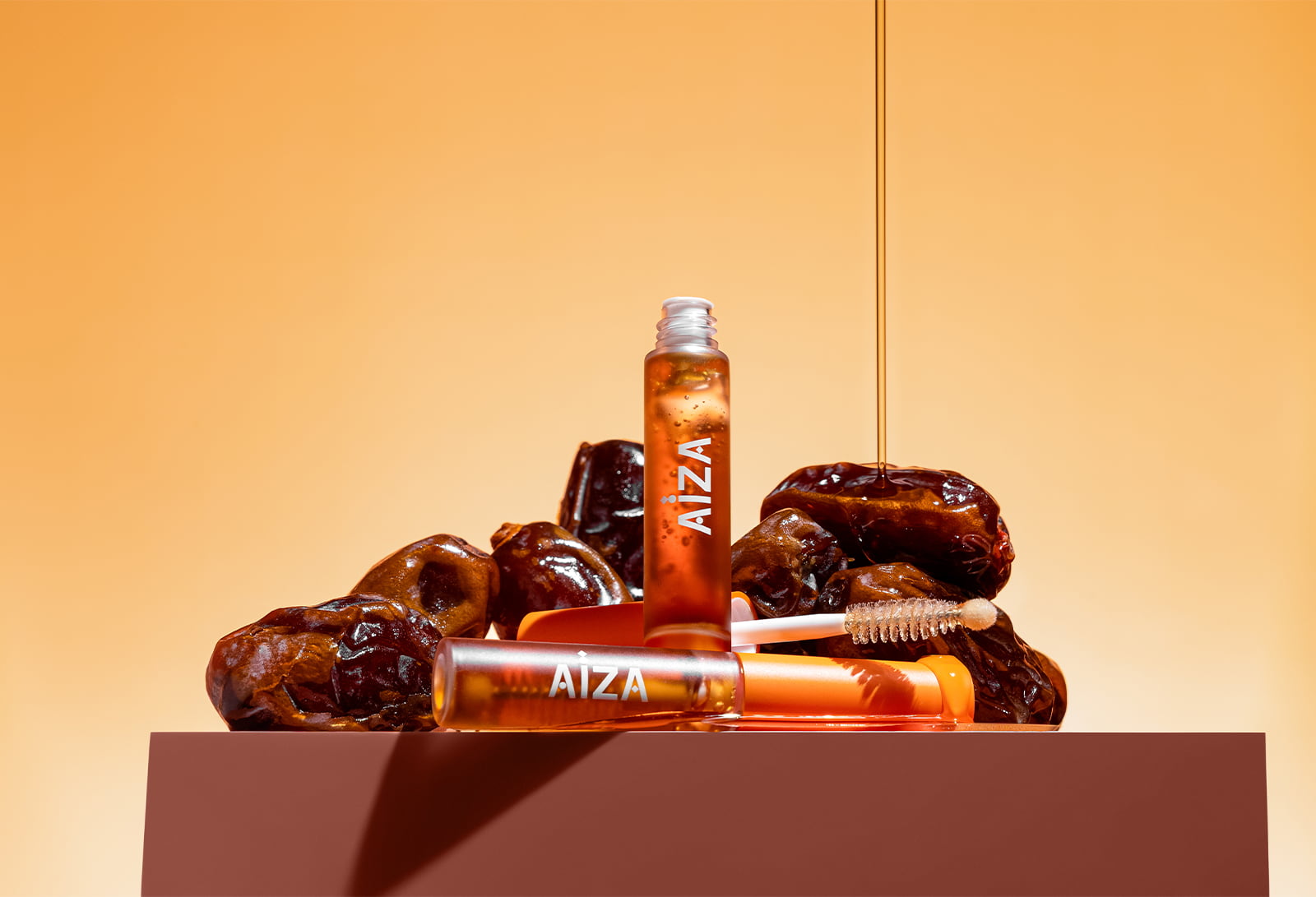
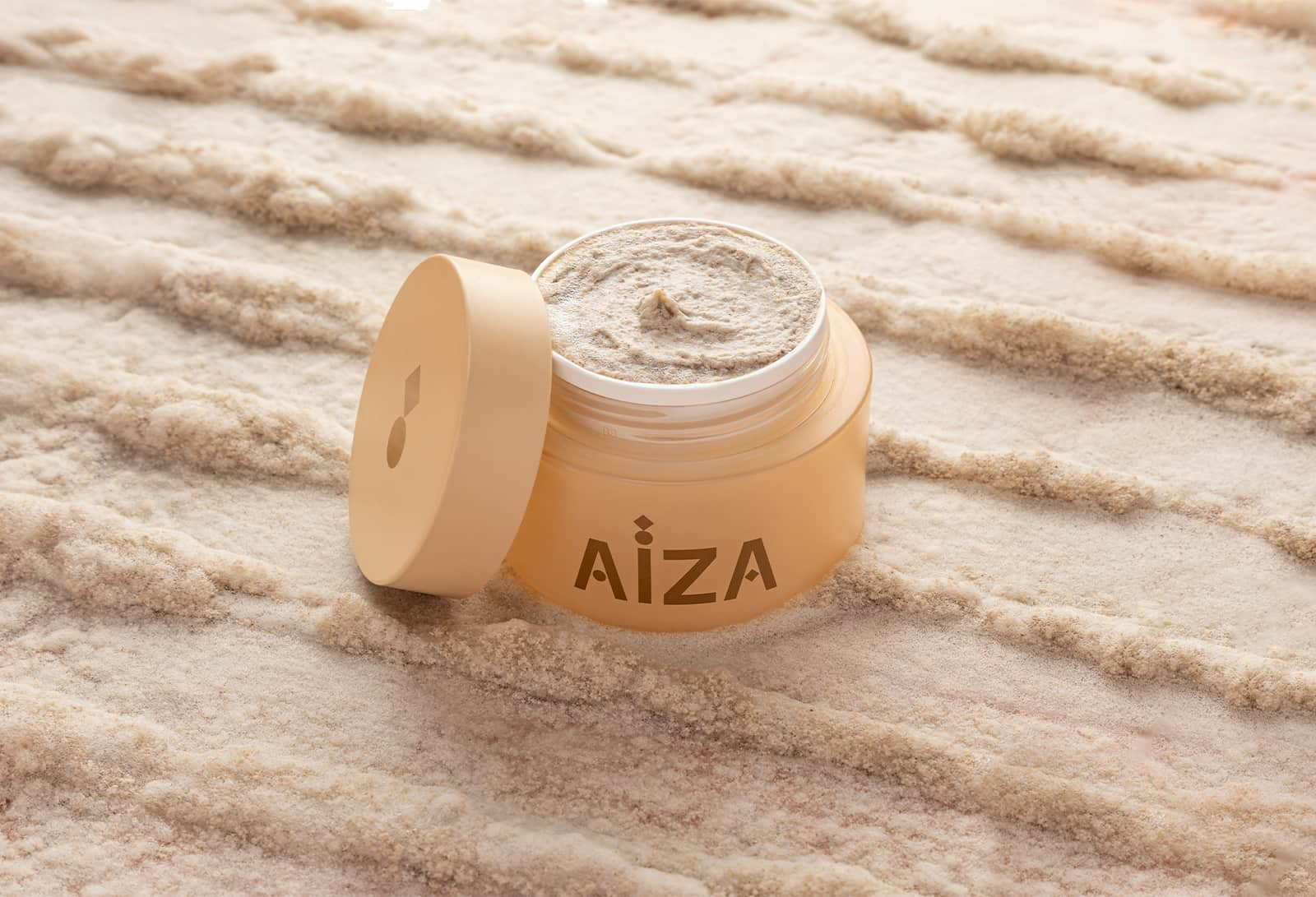
AÏZA was built to be that home. We think of it as Modern Arabia—a brand that is rooted in cultural heritage while being completely global in where it's headed. Our formulas are developed in leading labs across Korea, Japan, and Italy, bringing together regional icons like date, frankincense, and bakhoor with the best science-backed actives in the world. We started with the Arab consumer in mind, and the further we went, the clearer it became that this richness was never meant to be gatekept. Arab beauty belongs on the global map, and AÏZA is how it gets there.
Insights: Shubham Poddar, Founder + CEO
Why now and why you?
The region has opened in ways that feel genuinely historic. The Middle East is attracting global attention at a pace few predicted and is now woven into the world's most iconic cultural moments—in fashion, in music, in sport. Ulta Beauty, when it decided to expand outside North America for the first time, chose this region. The e-commerce infrastructure, supercharged through COVID, has made reaching a GCC consumer more powerful than at any point before.
The global rise of cultural beauty and the unmistakable rise of Arabia on the world stage are converging at the same moment, and that convergence is precisely why AÏZA exists now rather than ten years ago.
As for why us—we're here, and we're deeply rooted in real consumer insight. At the same time, the team has been shaped by global beauty and consumer brand experience—the kind that knows what it takes to build something with legs beyond its home market. That combination of cultural fluency and a global playbook is what we think gives AÏZA a genuine shot at putting Arab beauty on the world map.
What fuels your competitive advantage?
Three things sit at the heart of what AÏZA is building, and none of them are easy to copy.
The first is cultural authenticity at the formulation level—not just Arabic calligraphy on the packaging, but real regional ingredients, backed by science.
The second is timing. There is no established prestige GCC skincare brand built around local culture and heritage. That is a remarkable gap, and in a market as loyal as this one, the brand that defines a category tends to hold it for a long time.
The third is distribution intelligence. AÏZA launched DTC first, built its customer acquisition engine, learned its consumer deeply, and then entered retail. We bring real data and customer intimacy into every wholesale relationship we enter. We're not chasing shelf space but instead choosing it.
And running underneath all of it is the financial backing: a $3M seed round led by Peak XV (formerly Sequoia Capital India and Southeast Asia) and a Series A now closed. In beauty, capital is what separates brands that launch from brands that scale.
What’s your proudest accomplishment to date?
The brand love. Genuinely, unexpectedly, overwhelming brand love and how quickly it arrived.
We're a young brand. And yet we see AÏZA in cafes, passed between friends, shared by mothers with daughters. We watch it travel organically into publications we never pitched, into homes we never targeted. Leading celebrities have found us through the website like any other customer, not through a gifting brief. There's a difference between marketing that creates awareness and something that travels because it means something, and we've been lucky enough to experience the latter.
There's a particular moment that happens when a product finally reflects the person using it—when she sees herself in the brand, not just on the label. We feel that in every message we receive, every story we're tagged in, every mention that comes without any prompting from us. We built something the region had been quietly waiting for, and she told us so.
And the team who built it. Small, passionate, and genuinely exceptional—the kind of people who care about what they're building in a way that goes beyond the job description. That doesn't happen by accident, and it isn't something you take for granted.
What is the one thing you wish someone had told you?
That DTC is harder than it looks but worth every bit of it. Building a customer acquisition engine from scratch, as an unknown brand, is a grind. You burn through money on ads and influencer marketing, you question every decision, and the feedback loop is brutally honest.
But it builds something that most brands never have: a real understanding of your consumer and a marketing engine that is genuinely yours. When we launched at Ulta Beauty in January 2026, a year after our DTC launch, I walked into the store on day one and stood there looking at AÏZA sitting among 300 other brands. I felt more anxiety than anything else. There was no guarantee that any of it would travel.
What happened over the months that followed is the thing I wish someone had told me to expect: that the online machinery you build doesn't just serve your website, it starts converting everywhere. The awareness, the loyalty, the customer relationships you've spent a year earning online walk into the store with your customer. We became one of the leading brands at Ulta Beauty not despite the hard year of DTC, but because of it. The foundation is the growth. It just takes long enough to build that it's easy to doubt while you're in it.
What would you tell your past self before starting this journey?
Iteration is everything, and the sooner you make peace with that, the better. The wins are built from a long series of small failures you learn to move through quickly—a formula that didn't land, a campaign that didn't convert, a retail moment that underperformed. The founders who last aren't the ones who avoid those moments. They're the ones who treat every setback as data and get back on the treadmill.
But the other half of that advice, which nobody really tells you, is to occasionally step off the treadmill and look back at how far you've come. When you're always sprinting forward, the distance between where you started and where you are becomes genuinely hard to see. And that perspective is its own kind of fuel. You need it more than you think.
What does success look like in the next 3-5 years?
AÏZA in the conversation, from Dubai to London, from Riyadh to Paris, from Doha to Los Angeles. Part of the cultural moments and industry lists where beauty's future gets written—not because we pushed our way in, but because the brand earned its place there.
We want to play a genuine part in taking this region's beauty intelligence to the world, and in doing so, prove that the next great prestige brand doesn't have to come from where the last ones did. That would mean something beyond AÏZA. It would mean something for the region.
And underneath all of it: a profitable business with a global retail footprint, a product range that keeps raising its own bar, and customers who don’t just buy AÏZA—they belong to it.
What's one industry trend that is overhyped, and what's being overlooked?
"Chemical-free" as a positioning. The Ordinary put it plainly in one of their campaigns: Water is a chemical, oxygen is a chemical; if we went chemical-free, we couldn't even sell empty bottles. One hundred percent natural is not always better and almost never more effective. What actually matters is being clean, and clean is not the same as natural. At AÏZA, we blend tried and trusted natural ingredients with the best clean clinical actives available because the goal has always been efficacy. A formula that feels virtuous but doesn't deliver isn't doing anyone any favors.
What's being overlooked is the rest of the world. The Middle East, South Asia, Africa—these are not emerging markets in the way the industry casually uses that phrase. They are mature, sophisticated, high-spending beauty consumers who have simply been underserved for a long time. The next generation of iconic beauty brands won't only be born in New York or Paris. They'll come from somewhere that felt that absence acutely enough to do something about it.
How do you think the industry needs to evolve?
The industry needs to stop treating non-Western markets as geographic extensions of a Western blueprint. That means formulating for different climates and skin biology, not just translating marketing copy. It means pricing with local economic context not simply pegging to dollar exports. It means hiring local creative teams who carry a felt sense of the culture, not consultants parachuted in for a quarter and out before anything real gets made.
More broadly, the industry needs to move from diversity as an aesthetic choice to diversity as a design principle. Not who appears in the campaign, but what you make, how you test it, and who is in the room when you develop it. That's where real inclusivity lives, and the brands that figure that out first will have a significant head start on the ones still treating it as a marketing brief.
If you could wave a magic wand, what one wish would you make for your business?
A decade of patience, given back. Not to undo the speed—speed matters, and we've needed it—but to have the runway to build the kind of brand mythology that the great prestige houses built over generations. Estée Lauder wasn't built in five years. Neither was Aesop. The brands that last aren't just well-made; they're well-storied, and that story takes time to settle into culture in a way that can't really be manufactured or rushed. The wish is for that time and for the world's willingness to let a brand from this region write that story.


